Bedding Guide
Naturepedic Duvet Covers: A Guide to Sizing, Closures, and Seasonal Layering
A beautifully made duvet cover should feel effortless: the insert sits smoothly inside, the closure stays discreetly secure, and the bed can shift from summer lightness to winter warmth without losing its composure. Getting there begins with a few practical details—measurements, construction, and a thoughtful approach to layers.
The quiet importance of a well-fitting duvet cover
A duvet cover is both a protective shell and one of the largest visual gestures in a bedroom. It frames the bed, sets the mood of the room, and stands between the duvet insert and the everyday effects of sleep. Yet even the loveliest fabric can look untidy if its dimensions do not suit the insert beneath it. A cover that is too small may pull at the corners or compress the fill; one that is too generous can leave the insert shifting inside, gathering into soft, lopsided pockets.
Choosing a Naturepedic duvet cover—or any cover intended for a particular insert—therefore involves more than selecting “Queen” or “King” from a size menu. Those labels are useful starting points, not universal measurements. Bedding dimensions vary by maker, construction, and intended drape. The most reliable approach is to compare the actual dimensions of the cover with those of the insert, then consider how you want the finished bed to fall.
That small act of checking can make a noticeable difference. A well-matched cover gives the insert room to loft without sliding freely, keeps the edges looking composed, and makes the bed easier to remake. Before buying or laundering a set, read the current product specifications and care label. If the cover or insert is an older model, measure it directly rather than assuming its size from a familiar name.
How to choose the right duvet cover size
Start with the insert. Lay it flat, without stretching or compressing it, and measure its width and length from edge to edge. Record both measurements. Then check the dimensions listed for the duvet cover, taking care to distinguish the cover itself from the dimensions of a complete bedding set. If a brand provides an insert recommendation, treat it as helpful guidance—but still compare the numbers when you have them.
- Measure the insert. Note its width and length in the same units used by the cover’s specifications. For a puffy insert, let it settle naturally before measuring.
- Check the cover’s finished dimensions. Use the stated dimensions rather than relying only on Twin, Full, Queen, or King labels.
- Compare both measurements. A close match generally helps reduce shifting, but the ideal amount of ease depends on the insert’s loft and the cover’s construction.
- Consider the bed’s proportions. A cover may be sized for the insert rather than for a dramatic overhang. Think about mattress width, height, and the look you prefer at the sides.
- Confirm the closure and care details. Button placement, inside ties, and laundering instructions can affect day-to-day ease as much as the dimensions do.
Do not assume that a larger cover will automatically create a more luxurious drape. If the insert is substantially smaller, the excess fabric may fold inward or allow the fill to migrate. Conversely, an insert that is too large can make the cover feel taut, put strain on seams and closures, and reduce the soft, relaxed fall that makes bedding inviting. Matching dimensions is usually a better starting point than sizing up by instinct.
Construction matters, too. A lofty down or down-alternative insert can occupy more of a cover’s interior than a flatter one with similar measurements. Natural fill may also settle and shift differently from a compact synthetic fill. When the pairing is borderline, check the maker’s recommendations or ask the retailer for guidance. Avoid forcing an insert into a cover that feels undersized; repeated tension can place unnecessary stress on the fabric and closure.
If you are replacing only the cover, measure the insert you already own. If you are replacing both, compare their specifications together before ordering. A quick note saved with your bedding measurements can spare guesswork later, especially when shopping for seasonal sets or a second cover.
Closures, ties, and the details that keep a bed in place
A duvet cover closure is easy to overlook while browsing, but it determines how the insert is secured and how simple the cover is to remove. Common designs include buttons, snaps, zippers, and overlapping fabric flaps. No single style suits every household. The best choice is the one that holds reliably, feels comfortable at the foot of the bed, and fits the way you wash and remake bedding.
Interior ties attach to loops or corners on the insert. When tied, they help limit movement inside the cover, especially at the corners, where an insert can otherwise retreat or bunch. Check how many ties the cover includes and whether your insert has corresponding loops. If the insert has no loops, a seamstress may be able to advise whether discreet loops can be added without compromising its shell. Avoid improvising with tight knots around delicate fabric.
Buttons offer a familiar, considered finish. They can be easy to fasten one by one, and some designs use natural-material buttons as part of the cover’s aesthetic. Inspect the spacing and stitching periodically, especially after laundering. A loose button is much easier to repair before it disappears in the wash. When making the bed, close the opening fully so the insert cannot work its way out.
Zippers and snaps can provide a neat, continuous or nearly continuous closure, but their performance depends on the quality of the hardware and stitching. Keep the closure fully shut before washing and follow the maker’s instructions. If a zipper catches, do not pull forcefully; ease the fabric away from the teeth and move the slider gently.
An interior flap or fabric envelope may overlap the opening to conceal the edge of the insert. It can create a tidy finish while adding a layer of containment, though it does not necessarily replace corner ties. Read the construction notes carefully: a flap, closure, and ties serve related but distinct purposes.
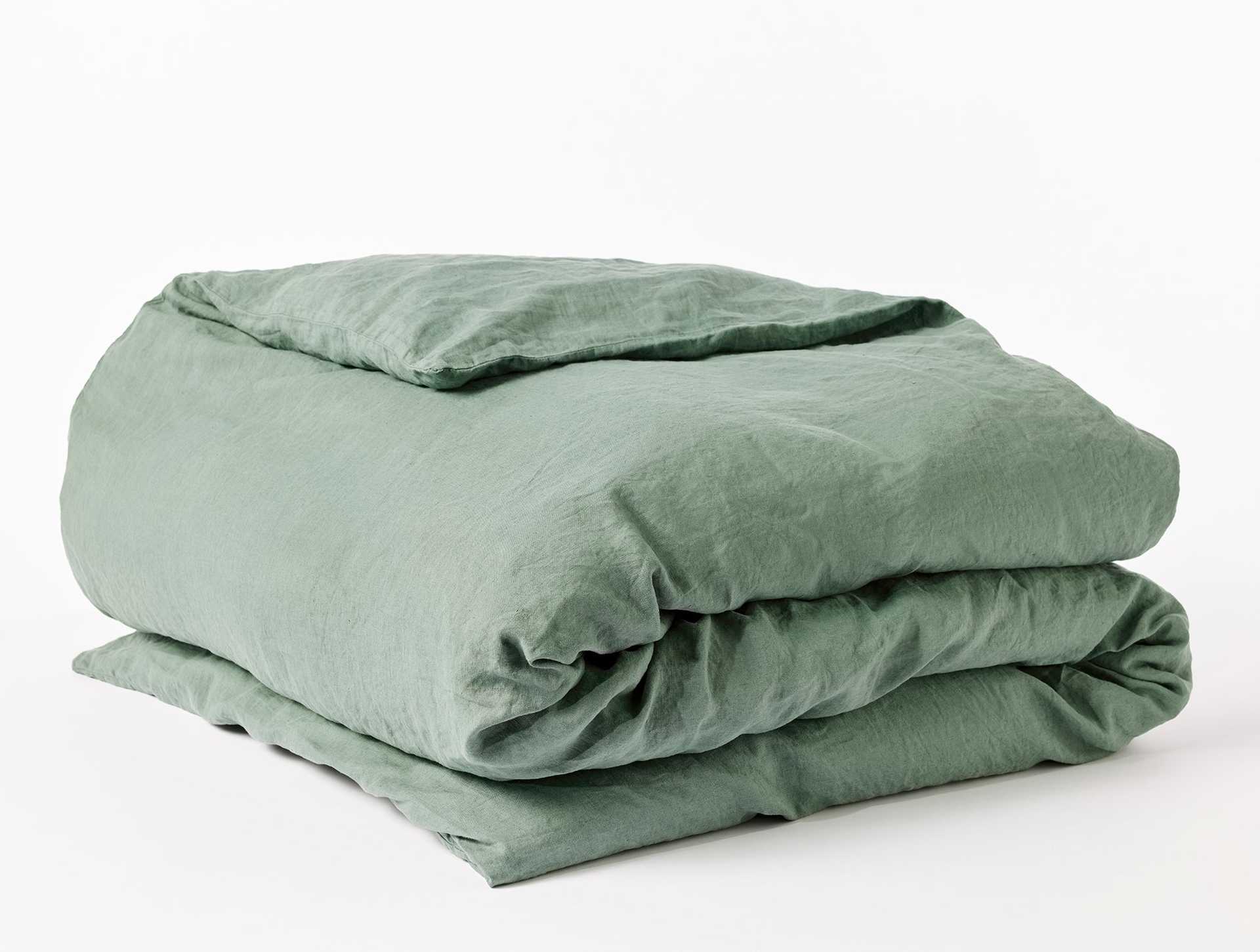
One example of this combination is the Organic Relaxed Linen Duvet Cover, described with an eight-inch interior flap, coconut shell buttons, and inside ties. Its details illustrate how a cover can bring several securing methods together. As with any bedding, check the individual listing for available dimensions, current construction, and care guidance before deciding whether it suits your insert.
A practical method for inserting the duvet
Even the right closure cannot compensate for an insert left folded in one corner. A calm, repeatable method makes the task easier and helps distribute the fill evenly. First, turn the cover inside out and lay it flat on the bed, with the opening at the foot. Place the insert on top, aligning the corners. Secure the inside ties to the insert’s loops, starting with the upper corners and then the lower ones where available.
Next, reach inside the cover through the opening, grasp the far corners of both cover and insert, and pull the cover right-side out over the insert. This approach—sometimes called the roll or burrito method—can reduce wrestling with a large duvet. Once the cover is in place, fasten the closure and give the duvet a few gentle shakes from the foot of the bed. Smooth the surface by hand, guiding fill toward any empty areas rather than tugging sharply at the seams.
For a king-size bed or a particularly lofty insert, two people can make the process easier. Afterward, check that the corners remain secured and that the fill is not twisted. A quick shake when making the bed, followed by smoothing the top edge, helps maintain an even silhouette through the week.
Seasonal bedding: warmth without rebuilding the bed
The most versatile bedroom is not necessarily the one with the heaviest duvet. It is the one whose layers can be adjusted as the room, weather, and personal comfort change. A breathable cover, an appropriate insert, and a few removable layers allow a bed to feel light in warm months and more cocooning when temperatures fall.
In summer, begin with a lighter insert or a breathable blanket beneath the cover, depending on your climate and preferences. Keep the upper layers simple: a fitted sheet, a flat sheet if you use one, and the duvet. A linen cover can contribute a relaxed texture and an airy appearance; cotton can offer a different hand and surface feel. Fabric alone does not determine how warm a bed will be, since insert fill, room temperature, humidity, and the number of layers all play a part.
During transitional weather, keep the duvet in place and add a light blanket folded across the lower third of the bed. This creates an inviting line and gives sleepers the option to pull up extra warmth without changing the entire arrangement. A throw can serve a similar purpose, particularly in a reading nook or at the foot of the bed, but should be chosen for practical comfort as well as appearance.
When the temperature drops, add insulation gradually. A wool blanket, quilt, or warmer comforter can sit between the sheet and duvet, or be folded over the top for an easy-to-remove layer. If the duvet itself is not warm enough, consider a suitably warmer insert rather than overloading the bed with heavy layers. Too much bedding can feel restrictive and may make it harder to regulate comfort during the night.
Think of layering as a considered edit. A tonal palette—ivory, chalk, stone, or muted earth colors—creates depth through texture rather than contrast. A crisp sheet, a softly rumpled duvet, and a tactile blanket can feel finished without looking overly arranged. For a more graphic approach, introduce a narrow stripe or a deeper accent in pillowcases, a coverlet, or a throw, keeping the largest surface calm.
Linen, cotton, and the feel of the top layer
Material influences the appearance and hand of a duvet cover, but it should be considered alongside weave, weight, finish, and care. Linen made from flax is known for its distinctive texture and relaxed drape. Many linen fabrics soften with use, and their slightly irregular surface can make a bed feel composed without appearing pressed into formality. Cotton covers vary widely: percale often feels crisp and matte, while sateen is typically smoother and has a subtle sheen. Blends can combine qualities of different fibers, so the label and product details matter.
For a natural, softly textured look, a linen duvet cover can pair beautifully with smooth cotton sheets. The contrast makes the bed feel layered, while keeping the materials visually distinct. Alternatively, matching a linen cover with linen pillowcases can create a unified, gently relaxed effect. The Organic Relaxed Linen Pillowcases are described as linen woven in Portugal from French-grown organic flax, with a garment-washed finish and pick-stitched cuffs. They offer one example of how a complementary textile can echo a linen duvet’s texture without requiring every element of the bed to match exactly.
Do not choose solely by thread count when comparing covers. Thread count is not a complete measure of quality, especially across different fibers and weave structures. More useful questions include: What is the fiber content? How is the fabric woven and finished? What are the dimensions? How should it be washed? Does the cover have ties, and are those ties compatible with the insert?
Care that preserves the fabric and the fit
Read the sewn-in care label before laundering, even if you have cared for similar bedding before. Products differ in fiber, finish, dye, stitching, and recommended wash temperature. A cover that is described as machine washable may still require a gentle cycle, cold water, or low-heat drying. Follow the specific instructions for the cover rather than applying a general rule to every textile.
- Close buttons, zippers, or snaps before washing to reduce snagging and stress on the closure.
- Wash bedding with items of similar color and weight, and avoid overcrowding the machine.
- Use detergent sparingly and choose a cycle appropriate to the fabric and the care label.
- Remove the cover promptly after drying to reduce deep creases; line drying may be suitable when the instructions allow.
- Store fully dry bedding in a clean, breathable space, away from dampness and direct sunlight.
Overdrying can make some fabrics feel harsher and may contribute to unnecessary wear. High heat can also affect shrinkage and the way a cover fits its insert. If a cover seems to have changed size after washing, compare its current measurements with the insert before forcing the pairing. A little natural rumpling is part of the appeal of many relaxed textiles; elaborate pressing is rarely necessary unless the care directions or your preferred look call for it.
Common duvet-cover mistakes to avoid
Relying on the size name alone. Two covers labeled Queen may not have identical measurements. Confirm the dimensions of both cover and insert.
Forgetting the ties. If the insert is not attached at the corners, it may shift during sleep or laundering. Secure each available tie before closing the cover.
Assuming a closure does the same job as a tie. Buttons, zippers, and flaps close the opening; interior ties help anchor the insert. Some designs include both because they address different points of movement.
Adding warmth without considering the whole system. If the bed feels too warm, a lighter insert or fewer layers may be more comfortable than changing the cover alone. If it feels cold, add insulation in a measured way.
Ignoring the care label. A beautiful cover is an everyday textile. Appropriate washing and drying help preserve its appearance, seams, and fit over time.
A simple checklist before you choose
- Have you measured the duvet insert rather than relying on its bed-size label?
- Do the cover’s published width and length make sense alongside those measurements?
- Does the cover include interior ties, and can they attach to your insert?
- Is the closure practical for regular laundering and daily bed-making?
- Does the fabric suit your preferred texture, breathability, and maintenance routine?
- Can you adapt the bed with a lighter or warmer insert and removable layers as seasons change?
The best duvet arrangement is one that feels as considered as it looks. A well-sized cover gives the insert room to settle, ties help keep its corners in place, and a suitable closure makes care straightforward. Seasonal layering then becomes an exercise in small adjustments: a lighter blanket, a warmer insert, or a simple change in texture rather than a complete bedroom reset.
With measurements in hand and the construction details understood, choosing a duvet cover becomes less of a guessing game. The result is a bed that feels balanced—neat but not stiff, luxurious without excess, and ready to meet the temperature of the night.